
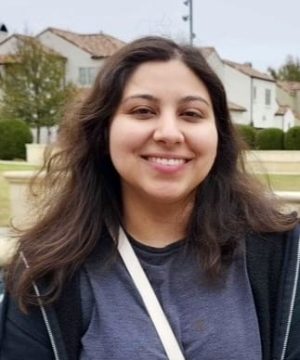
Adriana Martinez’s path into speech-language pathology reflects sustained commitment shaped by early educational interruptions, early responsibility, and purposeful clinical engagement. Her preparation has been formed through lived experience and disciplined study, alongside a growing awareness of how access to care, and the absence of it, shapes opportunity for children and families.
Her professional formation developed through pediatric clinical environments where she supported and eventually provided direct care in linguistically diverse settings. In those settings, clinical competence emerged alongside an understanding of the structural barriers that affect continuity and culturally responsive services.
Alongside her clinical work, Adriana completed both associate’s and bachelor’s degrees while working full time, demonstrating steady focus and long-term persistence. She approaches graduate education as the next step in a carefully developed trajectory, with long-term goals centered on bilingual service, family-centered intervention, and expanding access to care in communities where consistency and trust matter most.
For a long time, a solid educational foundation was something I could only hope for. Education was spoken of in my family as the way toward a better life, but growing up, stability was never guaranteed. My mother’s health challenges and caregiving responsibilities shaped our home, and formal schooling was often interrupted or out of reach. As a teenager, I learned to take on adult responsibilities early. There were years when survival came before structure, and learning often happened quietly, late at night, with borrowed books, outdated software, and whatever time I could find.
At sixteen, a mentor encouraged me to apply to high school. Until then, returning to school hadn’t felt like a real option. I entered through an alternative program, older than many of my peers and aware of how much I had missed. Progress wasn’t fast or easy. I worked nights, relied on public transportation, and studied whenever I could. By the time I graduated at nineteen, it wasn’t a matter of finishing early. It was a reflection of how long the road had been, and how much persistence it took just to stay on it.
College followed that same pattern of determination and necessity. Balancing full-time work with coursework required discipline, but it also clarified something important for me: education mattered most when it led to care. During my undergraduate studies, observation hours at the Callier Center were the first time I saw what intentional, compassionate support could look like in practice. Watching children struggle to communicate, and then slowly find ways to be heard, made the work feel deeply personal. It wasn’t just clinical skill that mattered. It was presence, patience, and understanding.
That experience led me to the pediatric clinic where I served as an SLP-Assistant. In the beginning, my role was to support licensed speech-language pathologists however I could: preparing materials, assisting with screenings, and carefully reading evaluation and re-evaluation reports to understand how children’s needs were identified and documented. Over time, that support extended beyond paperwork and preparation. I found myself sitting with families, listening to concerns, reviewing goals, and helping parents navigate challenges that affected their children’s development.
After earning my SLPA license, working directly with children brought a deeper sense of responsibility. Many of the families I worked with come from Spanish-speaking households, and being bilingual has allowed me to connect in ways that feel natural and respectful. Small moments stay with me: a child attempting a new word, a parent relaxing when they realize they are understood, a conversation that doesn’t need to be translated to be meaningful. Those moments have made me acutely aware of how much care depends on access, language, and trust, and how often those things are missing.
My path has made one thing clear: care is not evenly distributed, and it cannot be delivered well without understanding the communities it serves. Graduate training is the next step in learning how to provide that care with greater skill, consistency, and responsibility. It’s to be prepared. Prepared to show up for children and families who deserve to be seen, heard, and supported in their own language and within their own context.
I’m no longer just trying to overcome the instability I grew up with. I’m learning how to transform it into care. Care that is informed by experience, strengthened by training, and grounded in commitment to the communities that shaped me.
Adriana’s formation reflects the core commitments of the Clinical Pathway Scholarship: sustained dedication to the field, clinical integrity, and a clear orientation toward service. Her pathway—shaped by nontraditional education, early responsibility, and bilingual clinical experience—demonstrates a steady commitment to expanding access to speech-language care in communities where consistent services can be difficult to sustain.
The SpeechTherapy.com Clinical Pathway Scholarship exists to recognize and support developing clinicians whose professional formation reflects sustained commitment, clinical integrity, and a heart for service. Over time, the scholarship seeks to encourage pathways that bring high-quality speech-language services to areas where consistent access to care remains out of reach for many families. By investing in clinicians who are guided by responsibility and long-term service, the program aims to contribute to a more equitable distribution of communication support.

Our first two $5,000 Clinical Pathway Graduate Scholarships have been awarded.
We’re building SpeechTherapy.com to strengthen professional identity and fund future clinicians.
If this matters to you, we invite you to be part of what we’re building.
We’ll only use your email for occasional SpeechTherapy.com updates. No spam.